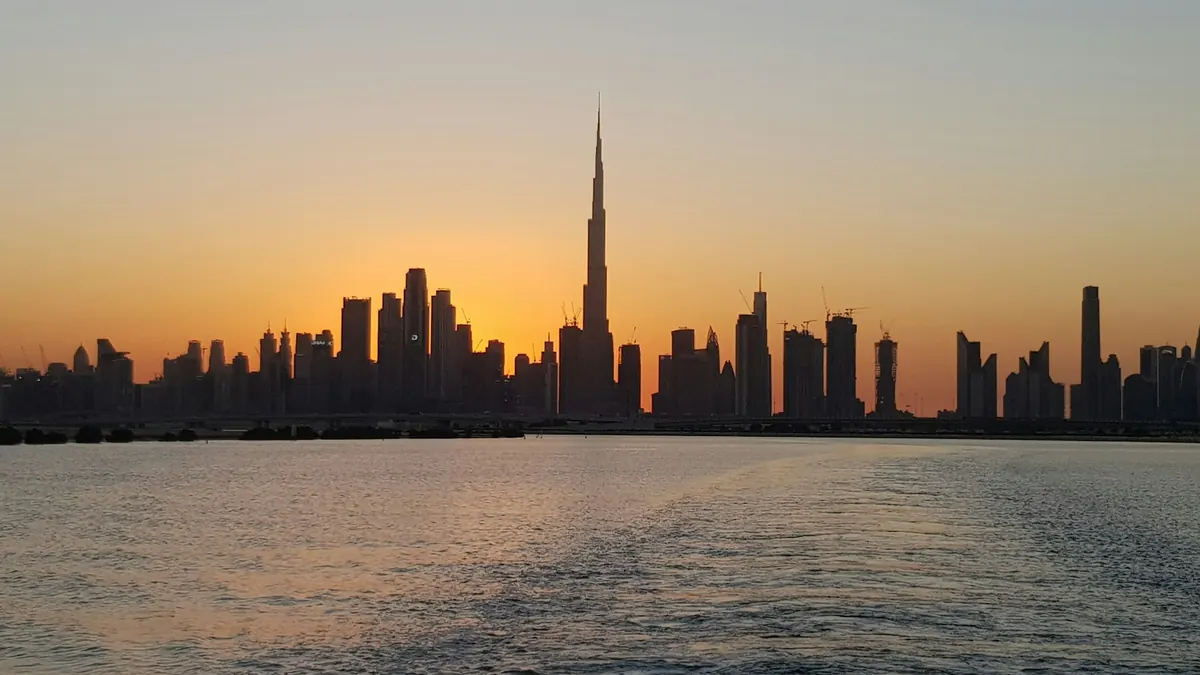
The calendar shapes a trip to Dubai more than many travellers expect. The same flight can be easy to arrange in October and scarce in late December, comfortable on a February afternoon and constrained by heat in August. Knowing the rhythm of the year helps you choose dates, book at the right time and understand the price.
The Dubai year at a glance
| Months | Weather (approx. daytime highs) | Demand for flights in | Worth knowing |
|---|---|---|---|
| November to February | Mid 20s to around 30°C | Highest | Christmas and New Year are the hardest dates of the year |
| March and April | Around 28 to 33°C | High, easing | Ramadan may fall here, depending on the year |
| May to September | 37°C rising past 40°C | Lowest | Many residents fly out to Europe for the summer |
| October | Mid 30s°C | Rising | A good shoulder month for availability |
Peak season and its busiest dates
From November to March, pleasant weather draws visitors, events and conferences, and private traffic rises with them. The days around Christmas and New Year are the most constrained: slots fill early, parking for private aircraft at DXB becomes scarce and good aircraft are booked weeks ahead. UAE National Day on 2 December adds a holiday period at the start of the season. In November of odd-numbered years, the Dubai Airshow brings heavy business aviation traffic and restrictions to DWC.
If your dates fall in this window, request early and keep a little flexibility. A day either side of the busiest dates can open up more aircraft and better arrival times.
Ramadan and Eid
Ramadan and the two Eid holidays follow the Islamic lunar calendar, so they arrive about eleven days earlier each year. In 2027, Ramadan is expected to begin in early February, with exact dates confirmed by the sighting of the moon. During Ramadan, business hours are often shorter and visitors are asked to be considerate about eating and drinking in public during daylight. Eid al-Fitr marks its end with a public holiday, and Eid al-Adha follows about ten weeks later. Both Eids bring a rise in travel as residents fly to see family, so flights out of Dubai can be busy around them.
Summer: heat and aircraft performance
Between June and September, daytime temperatures in Dubai regularly pass 40°C. Heat affects people and aircraft. Hot air reduces the lift and engine power available for take-off, which can limit how much weight a jet can carry on a long departure from Dubai on a summer afternoon. Operators deal with it by planning departures in the cooler hours, adjusting fuel and load, or adding a short fuel stop on the longest routes.
On the ground, cabins heat up quickly. Operators cool the aircraft before boarding, and the best plan is to arrive at the terminal close to departure rather than waiting on the ramp.
Summer is the quietest season for flights into Dubai, and often the easiest time to find aircraft and convenient arrival slots.
Events that move the calendar
Beyond the holidays, a handful of events reliably fill the region's airports. The Abu Dhabi Grand Prix weekend in late autumn brings a wave of private aircraft to the UAE. The Dubai World Cup race meeting, usually held at the end of March or the start of April, draws visitors from around the world. Large trade shows and conferences in Dubai cluster in the cooler months. If your trip coincides with one of them, treat it like a holiday date: request early and expect fewer aircraft to choose from.
Booking windows by season
- Christmas and New Year: request as early as possible; the best aircraft are often committed weeks ahead.
- Other winter dates: a few weeks ahead is sensible, more for large groups or larger aircraft.
- Shoulder months: a week or two ahead usually leaves plenty of choice.
- Summer: short-notice trips are often straightforward, though departure times may be shaped by the heat.
How the calendar affects price
Charter prices follow demand. Peak dates mean fewer available aircraft and less room to negotiate, while quieter months bring more choice. Seasonal traffic also creates repositioning flights: in summer, many aircraft based in the Gulf fly residents to Europe and return empty, and in late spring the winter visitors head home. Those returns sometimes become empty legs, priced well below a normal one-way, for travellers whose plans fit their timing.
Shoulder months can be the sweet spot. October and late April often combine warm weather, easier slots and a wider choice of aircraft, without the premium that comes with the busiest winter dates. If your plans allow some movement, ask your advisor to price two or three alternative dates side by side.
A planning checklist
- Check your dates against Christmas, New Year, National Day, the Eid holidays and major events.
- For peak dates, request a quote early and hold a day of flexibility either side.
- In summer, ask about departure times that avoid the hottest hours.
- Confirm passports and visas for every traveller well before you fly.
- Tell your advisor if your dates are flexible; it widens the choice of aircraft and empty legs.
Travelling with family in the warmer months
Families often travel in the school holidays, which in many countries fall in Dubai's hottest months. It works well with a little planning: choose morning or evening departures, ask the operator to cool the cabin before boarding, and keep transfers between the terminal and the car short. Hotels and indoor attractions are built for the climate, so the heat matters most in the minutes spent outdoors at either end of the flight.
Choosing the moment
There is no wrong time to fly to Dubai, only trade-offs between weather, availability and price. Winter offers the best conditions and the busiest airports; summer offers space and value but asks for planning around the heat. Match the trip to the season, and the season will work for you.
Plan your flight to Dubai
Send your departure city and dates. A charter advisor will email aircraft options with an all-in price for each.
Request a quote